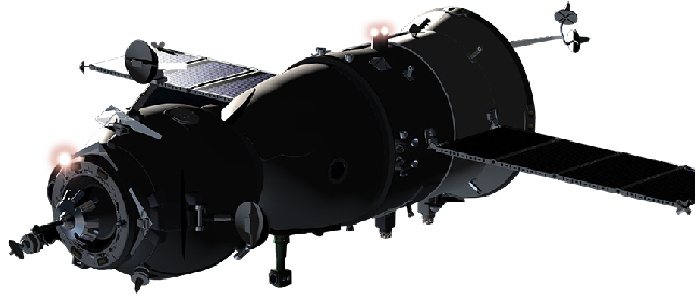
Satellites are launched into space
to do a specific job.
The type of satellite that
is launched to monitor cloud
patterns for a
weather station will be different than a satellite
launched to send television signals across Canada.
The satellite must be designed specifically
to fulfill its function.



Satellites are used for many purposes. Among several other applications, they can be used to make star maps and maps of planetary surfaces, and also take pictures of planets
Satellites are used for many purposes. Among several other applications, they can be used to make star maps and maps of planetary surfaces, and also take pictures of planets
Satellites are used for many purposes. Among several other applications, they can be used to make star maps and maps of planetary surfaces, and also take pictures of planets
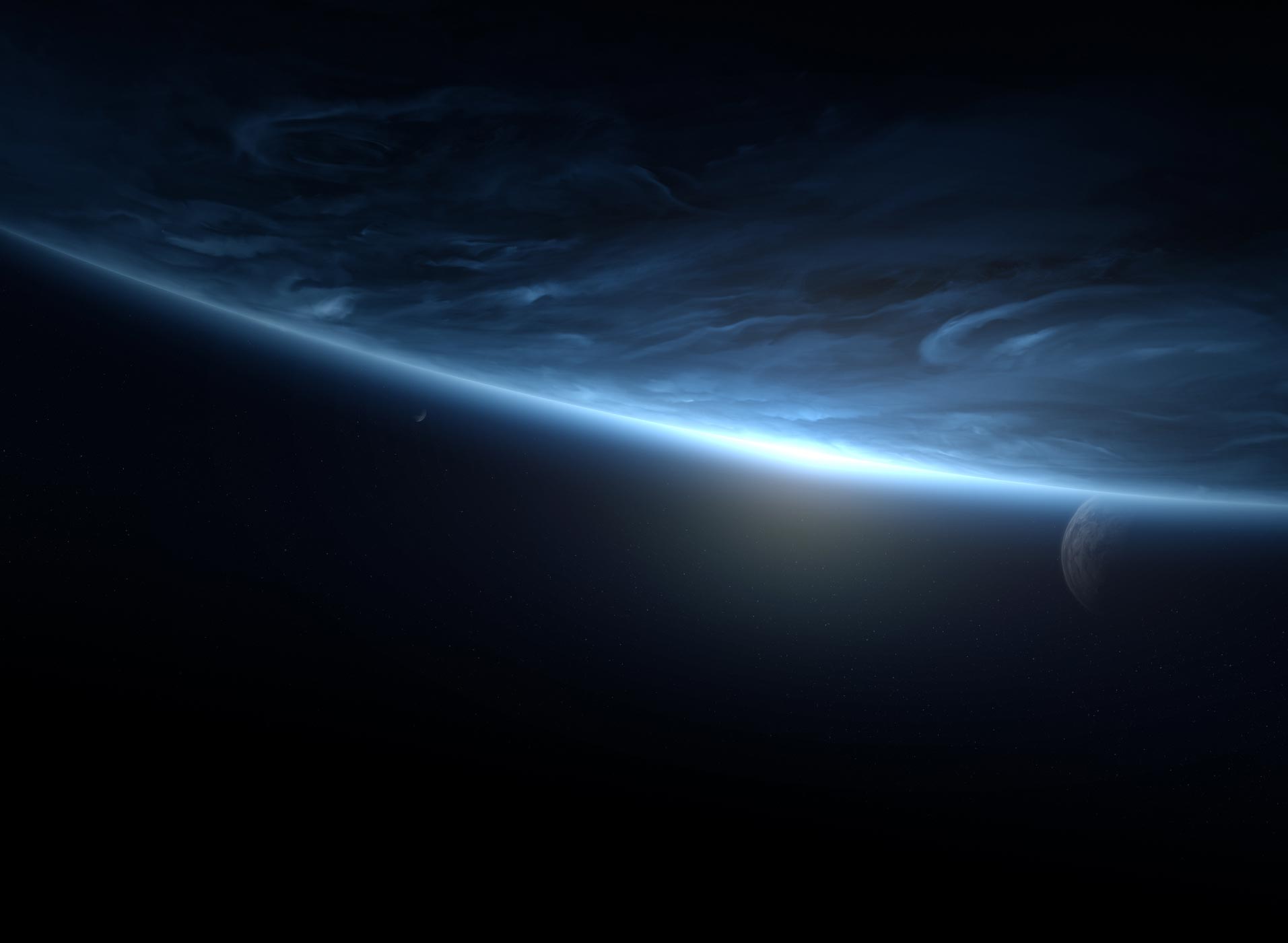
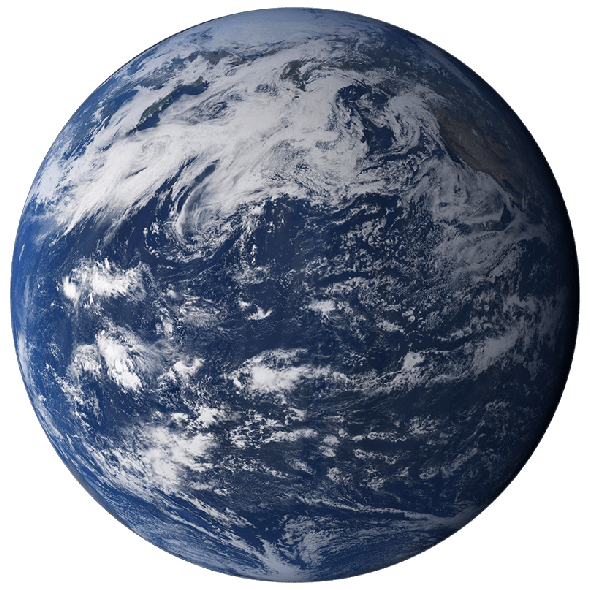
Earth is the third planet from the Sun and the only astronomical object known to harbor life. According to radiometric dating and other sources of evidence, Earth formed over 4.5 billion years ago. Earth's gravity interacts with other objects in space, especially the Sun and the Moon, Earth's only natural satellite. Earth orbits around the Sun in 365.26 days, a period known as an Earth year. During this time, Earth rotates about its axis about 366.26 times
H2O" and "HOH" redirect here. For other uses, see H2O (disambiguation) and HOH (disambiguation). For broader coverage of this topic, see Water.70% of the Earth’s Surface is Covered in Water
The Earth’s Atmosphere Extends to a Distance of 10,000 km
The Solar System[a] is the gravitationally bound system of the Sun and the objects that orbit it, either directly or indirectly.[b] Of the objects that orbit the Sun directly, the largest are the eight planets,[c] with the remainder being smaller objects, such as the five dwarf planets and small Solar System bodies. Of the objects that orbit the Sun indirectly—the moons—two are larger than the smallest planet, Mercury.
The Solar System formed 4.6 billion years ago from the gravitational collapse of a giant interstellar molecular cloud. The vast majority of the system's mass is in the Sun, with the majority of the remaining mass contained in Jupiter. The four smaller inner planets, Mercury, Venus, Earth and Mars, are terrestrial planets, being primarily composed of rock and metal.
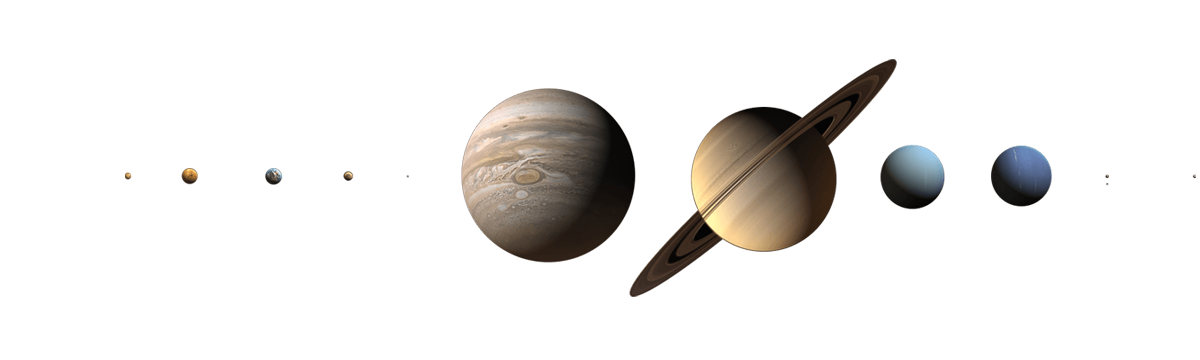
Jupiter
Saturn
Uranus
Earth
A planet is an astronomical body orbiting a star or stellar remnant that is massive enough to be rounded by its own gravity, is not massive enough to cause thermonuclear fusion, and has cleared its neighbouring region of planetesimals.
The term planet is ancient, with ties to history, astrology, science, mythology, and religion. Five planets in the Solar System are visible to the naked eye. These were regarded by many early cultures as divine, or as emissaries of deities.
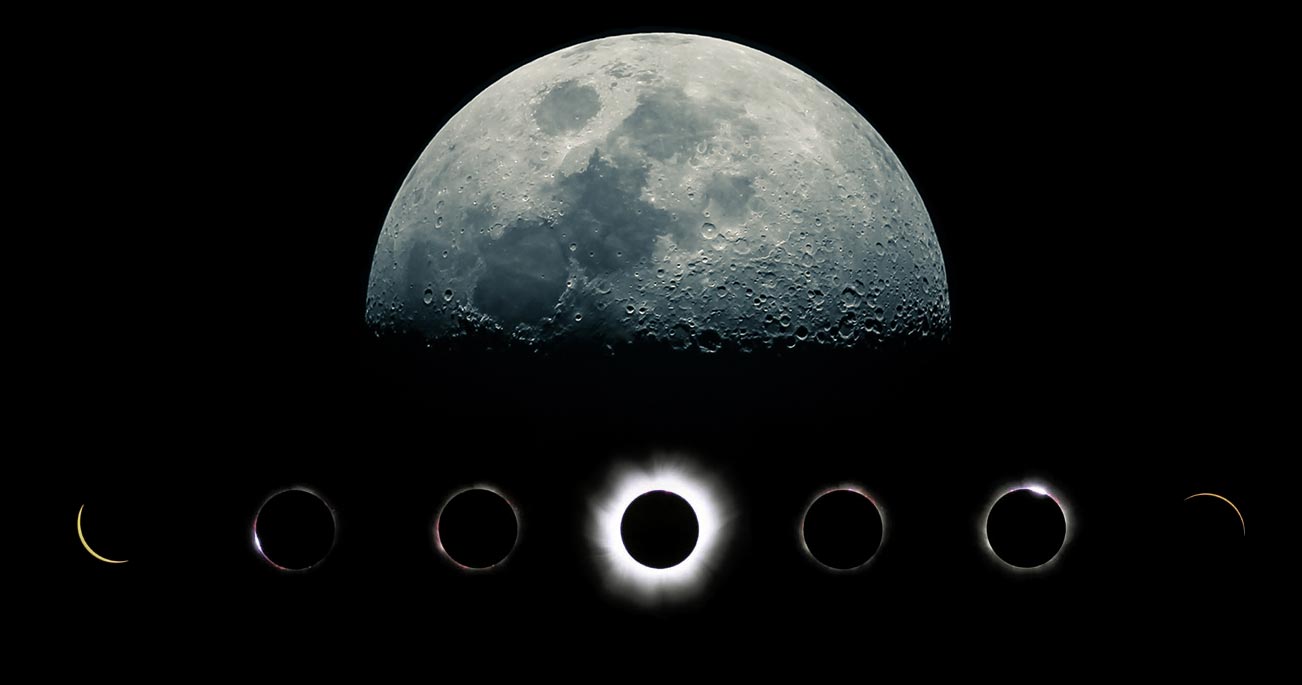
A lunar eclipse occurs when the Moon passes directly behind Earth and into its shadow. This can occur only when the Sun, Earth, and Moon are exactly or very closely aligned (in syzygy), with Earth between the other two. A lunar eclipse can occur only on the night of a full moon. The type and length of a lunar eclipse depend on the Moon's proximity to either node of its orbit.
Mars is the fourth planet from the Sun and the second-smallest planet in the Solar System after Mercury. In English, Mars carries a name of the Roman god of war and is often referred to as the 'Red Planet'. The latter refers to the effect of the iron oxide prevalent on Mars' surface, which gives it a reddish appearance distinctive among the astronomical bodies visible to the naked eye. Mars is a terrestrial planet with a thin atmosphere, having surface features reminiscent both of the impact craters of the Moon and the valleys, deserts, and polar ice caps of Earth.
Mars has 2 moons: Phobos and Deimos. The first one will one day destroy Mars and create a disc of matter that will last for another 100 milion years
To inhabit Mars, we would need first to create an atmosphere. Currently, the Carbon dioxide level is at 95.97% which is not so good for any living organism
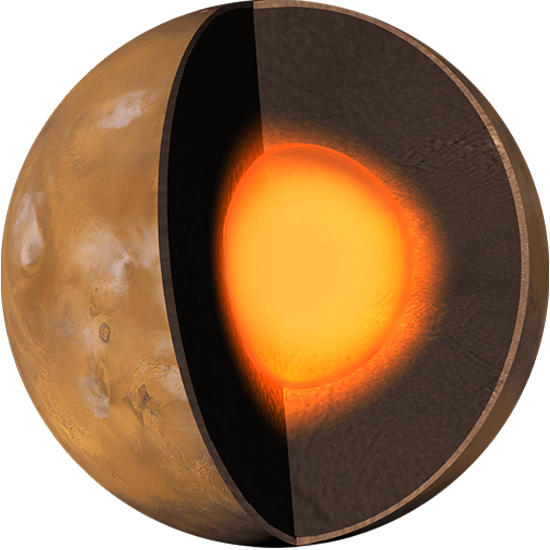
Mars can easily be seen from Earth with the naked eye, as can its reddish coloring.
The geology of Mars is the scientific study of the surface, crust, and interior of the planet Mars. It emphasizes the composition, structure, history, and physical processes that shape the planet.
A spacecraft is a vehicle or machine designed to fly in outer space. A type of artificial satellite, spacecraft are used for a variety of purposes, including communications, Earth observation, meteorology, navigation, space colonization, planetary exploration, and transportation of humans and cargo. All spacecraft except single-stage-to-orbit vehicles cannot get into space on their own, and require a launch vehicle.
The Milky Way is the galaxy that contains the Solar System, with the name describing the galaxy's appearance from Earth: a hazy band of light seen in the night sky formed from stars that cannot be individually distinguished by the naked eye.
A rover is a space exploration vehicle designed to move across the surface of a planet or other celestial body. Some rovers have been designed to transport members of a human spaceflight crew; others have been partially or fully autonomous robots. Rovers usually arrive at the planetary surface on a lander-style spacecraft.